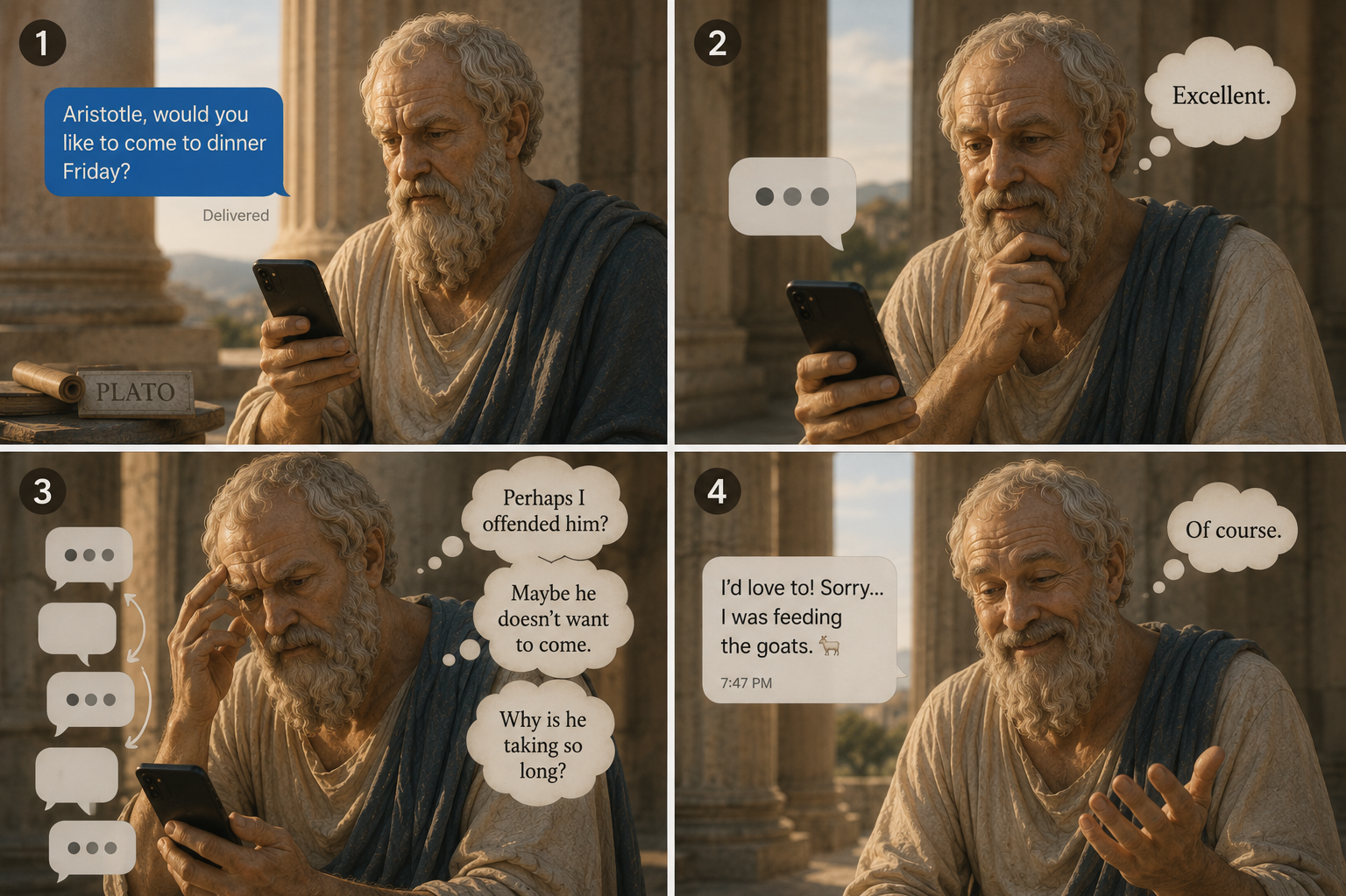
Plato Was Warning Leaders About This 2,300 Years Ago
Imagine Plato with a cell phone. He wants to invite Aristotle and his family over for dinner and wine on Friday evening.
He sends the text. Three dots appear. OK, he's responding, Plato thinks. Then they disappear. Hmmm.

The Fire That Changed How We Think About Leadership: Four leadership lessons from the Mann Gulch tragedy.
The forest fire rapidly gaining on the 16 firefighters, foreman Wag Dodge told everyone to get into the burned out area where they could survive. No one listened.
Leadership begins with helping others understand what is happening.
Mississippi Goddam: Leadership in an Era of Competing Moral Realities
Leaders increasingly find themselves managing teams that no longer share the same assumptions about fairness, belonging, merit, and inclusion.
Conversations that once felt relatively stable now feel contested. Employees increasingly interpret the same events through profoundly different moral lenses. Leaders are left with a difficult question: How do you sustain trust and cohesion when people no longer agree on what fairness itself means?
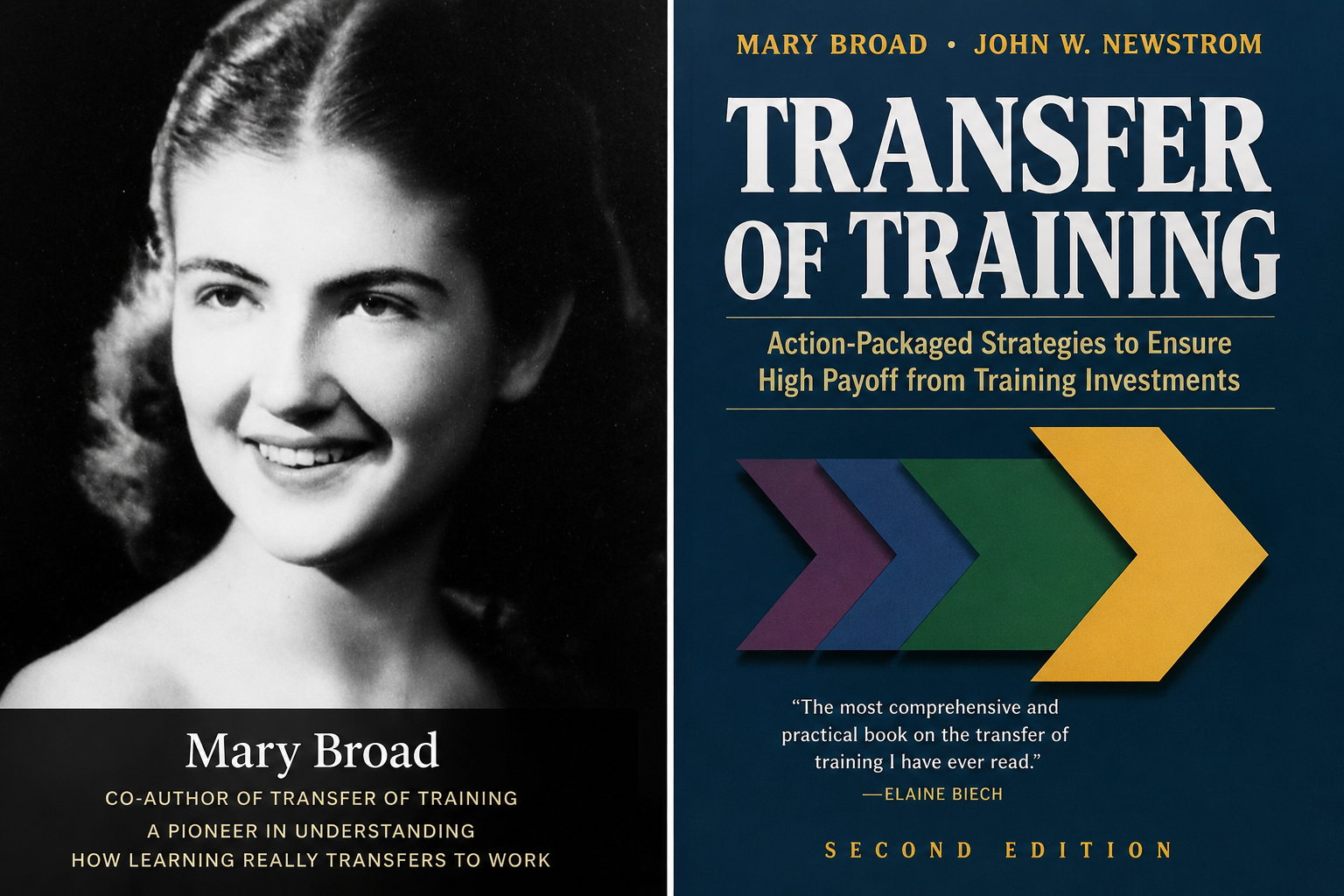
Mary Broad and the Question We Should Still Be Asking About Leadership Development
Mary Broad and the enduring influence of Transfer of Training—a work that challenged us to think beyond the classroom and into real-world application.

Fragmentation and Leadership: The Cost of Leading as if the World Were Whole
Leadership doesn’t feel harder because the work has changed. It feels harder because the conditions for coherence are disappearing. This is not a failure of leaders. It is a structural and psychological shift in the conditions of leadership itself.

CASE STUDY: Why the Most Powerful Leadership Development Happens Between Sessions
A strong leadership program can create a subculture, or a group that has a special connection. Max Dupree refers to this as leadership jazz.

The Cartesian Hangover in Modern Leadership
We continue to act as though rationality sits above emotion—as if good leadership means suppressing feeling in favor of logic, objectivity, and control. This assumption runs deep in management culture, even as neuroscience has quietly dismantled it.

Escape from Freedom: Germany Under Hitler and MAGA Under Trump
For those trying to make sense of the social and psychological disorientation many Americans are experiencing following the election of a second Trump administration, I find myself returning to a (1941) book I read nearly forty years ago while in school: Escape from Freedom by Erich Fromm. History does not repeat itself neatly, but it often echoes in recognizable ways.

Why Good Employees Retreat: Leadership in an Age of Identity Strain
In modern organizations, leadership focuses on alignment, execution, and performance. These priorities assumed relatively stable roles, shared norms, and institutions that quietly supplied meaning, identity, and moral orientation in the background. Leaders could concentrate on strategy and results because the system itself carried much of the psychological and ethical weight.

The Real Meaning of ‘Woke’ (and Why CHRO’s Should Care)
In this holiday season, as we celebrate the birth of Jesus amid the din of political rhetoric, it is helpful to return to something deeply human: the dignity within every person. This is also where the idea of wokeness — stripped of distortion — naturally intersects with postmodern leadership.

The Dark Days of Leadership
Most people want the title of “leader.” It sounds good. There’s a certain status that comes with being a supervisor, manager, or executive.
But the trouble comes when the toll must be paid.
Like anything in life—sports, business, popularity—leadership has its highs and lows. The real question is:
What kind of person can endure the darker side of leadership?

The Medium is the Leader
Every move you make
And every vow you break
Every smile you fake, every claim you stake
I'll be watching you

Not Your Father’s Performance Review
A New Age of Measuring Performance
“So, how am I doing?”
In decades past, that question was met with a stiff smile, a closed door, and a score: “3 out of 5 — Meets Expectations.” One hour a year to define your worth, your future, and your potential. For many, performance reviews were something to survive; a box to check, a form to fill, a score to justify.
That model? It’s fading. And for good reason.

Culture and Leadership Development: The Hidden Link Most Organizations Miss
Culture doesn’t live in a slogan. It lives in the behavior of your leaders.
When I ask senior executives to describe their organizational culture, they often respond with confident, well-worn phrases:
“We’re a performance culture.”
“We’re all about the patient.”
“We like to have fun, we’re kind of quirky around here.”
These statements may be well-intentioned, but they often reflect a surface-level understanding of what culture really is and how it’s shaped.

The Forgotten Leaders: Why Supervisors Hold the Key to Engagement and Retention
While we’ve poured resources into “high potential” executives, supervisors have too often been left at the back of the developmental feeding line. The result? Organizations struggle with attrition, poor engagement, inconsistent safety or quality outcomes — and yet they look to the C-suite or launch top-down campaigns to solve the problem.

Leadership Development: Are We Doing It Wrong — Or Just Incompletely?
Corporate America is projected to increase its leadership development investment from $166 billion to over $200 billion in the next five years. That’s a massive bet on the power of leaders to move organizations forward.
But here's the real question: If we're investing this much, why aren't more organizations teeming with leadership talent?